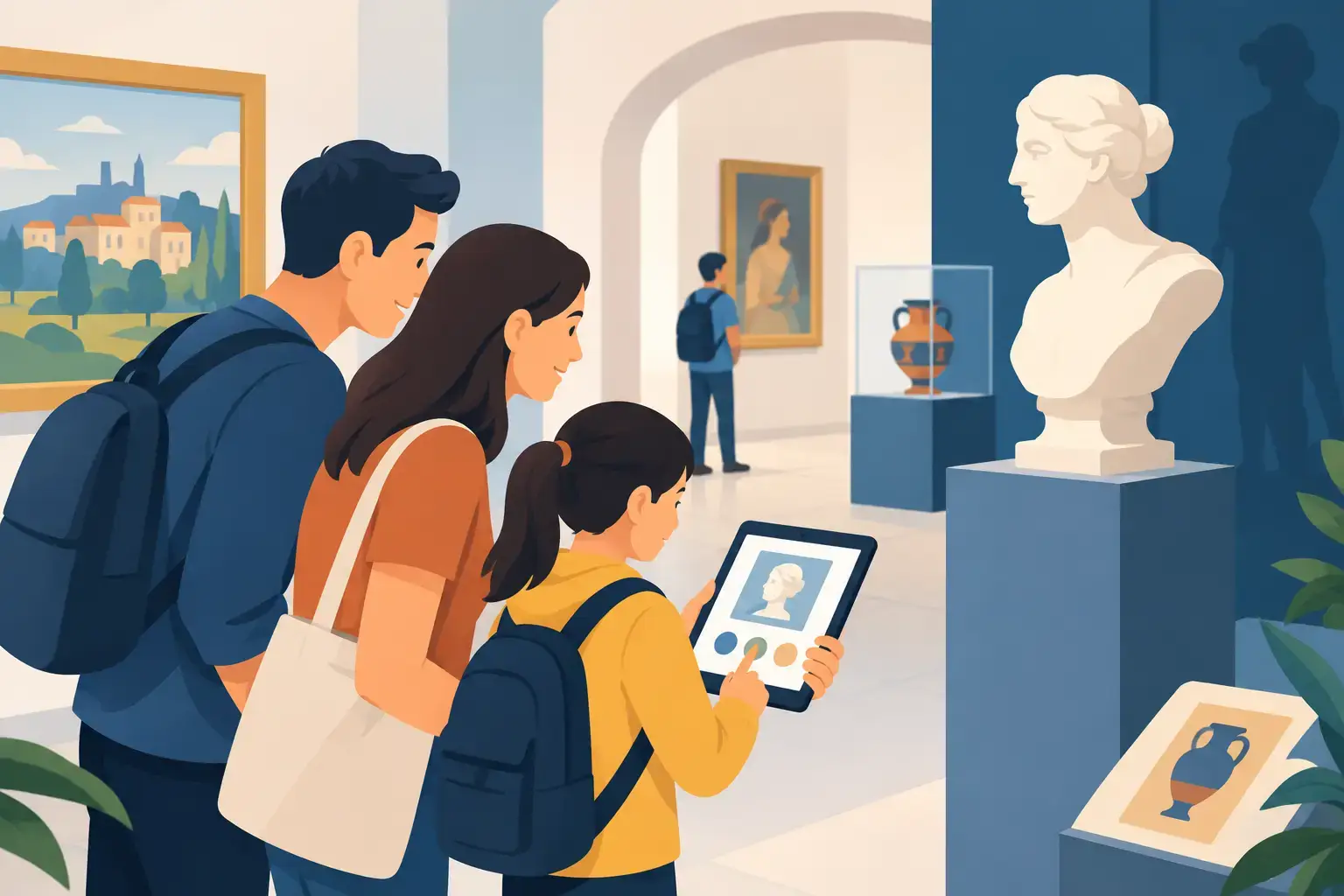
A child looks for a detail in a carving. A group compares answers in front of a display case. A family listens to a story before choosing its next stop. A game can make a visit more active, but it has to do more than entertain. At a museum, heritage site or tourist office, it should help visitors explore the subject, suit different audiences and be practical for staff to run.
A good game gives visitors another reason to look, listen, compare and remember. It should draw attention to the collection or the place, not away from it.
Choose games that suit the purpose of the visit
Start with the goal. Are you helping families through a long tour, making a historic town centre easier to explore independently, highlighting overlooked objects or encouraging people to linger in a temporary exhibition?
Observation games work well with architecture, landscapes and objects rich in detail. Ask visitors to find a shape, spot a colour or connect a detail with its story. The task should be clear but not obvious, and it should not assume specialist knowledge.
A quiz can reinforce something visitors have heard or discovered. Rather than asking them to repeat a fact, use plausible choices or ask them to connect clues. A question might reveal how an artwork was made, put a personal account in context or explain a street name.
A trail of riddles can lead visitors to another stop, a viewpoint or an audio track. It works well in gardens, historic districts and outdoor routes. Make it easy to continue even if someone cannot solve a clue, especially on long or poorly signposted routes.
Role-play and choices that shape the story can help visitors see the past through the eyes of an artisan, resident, archaeologist or historical figure. They take more work but can be memorable. On sensitive subjects, check the evidence carefully: a game should neither oversimplify history nor turn painful memories into entertainment.
Let the cultural story guide the game
Decide what visitors should take away from each stop before writing the first question. For example, ask them to use three clues to work out who used an old object and why. They can study the material, signs of wear and clues to its age. The answer then explains what they noticed.
A thread running through the visit, such as finding a lost place or tracing changes in a landscape, works better than a series of disconnected questions. Offer hints or explained answers so families, school groups and visitors with different levels of knowledge can all take part.
Guideius addresses every digital cultural mediation challenge
Create a multilingual smartphone audio guide that is easy to deploy, accessible and tailored to your museum, heritage site or destination.
Plan for accessibility from the start
Design for different ways of visiting. Consider language, reading level, sensory needs, mobility and conditions at the site. Give short instructions and avoid relying on colour, images or sound alone. Provide text for audio clues, descriptions for visual tasks and clear landmarks on maps. Outdoors, test in bright light, rain, noise and areas with weak signal.
Adapt wordplay and local references if they do not work in another language. Above all, let people skip the games and still follow the route, hear the audio and read the explanations.
Keep games manageable for staff
Games on a visitor's smartphone can open via QR code or be part of a location-based route. This avoids buying and maintaining dedicated devices. Staff can correct a clue, add a translation or change a stop when building work or an exhibition alters the route.
A few well-placed interactions can be more effective than extra screens or elaborate rewards. Offline access matters in rural places, old buildings and on outdoor routes with unreliable coverage.
Use usage data to spot where visitors stop. Check whether the problem is the location, the instructions or the difficulty. A popular quiz that few people finish may need a clearer introduction or fewer questions. Use these figures to improve the visit, not to track individuals.
Test on site before rolling out
Watch a few representative visitors. Can they find the start and understand the task? Are they looking at the collection or at the screen? Include families, solo visitors, international visitors and people less familiar with digital tools where possible. Ask learning and front-of-house staff what problems they see.
Start with two or three games at useful points rather than redesigning the entire visit. A tool such as Guideius can add those activities to a self-guided audio tour while the team retains control of the content.
The best game is not the one that holds people longest. It is the one that makes them look up, ask a question and leave with a story they want to tell.
Would you like to apply these ideas to your site?
Guideius helps deploy multilingual audio tours with QR codes, GPS, offline mode, multimedia content and privacy-friendly analytics.