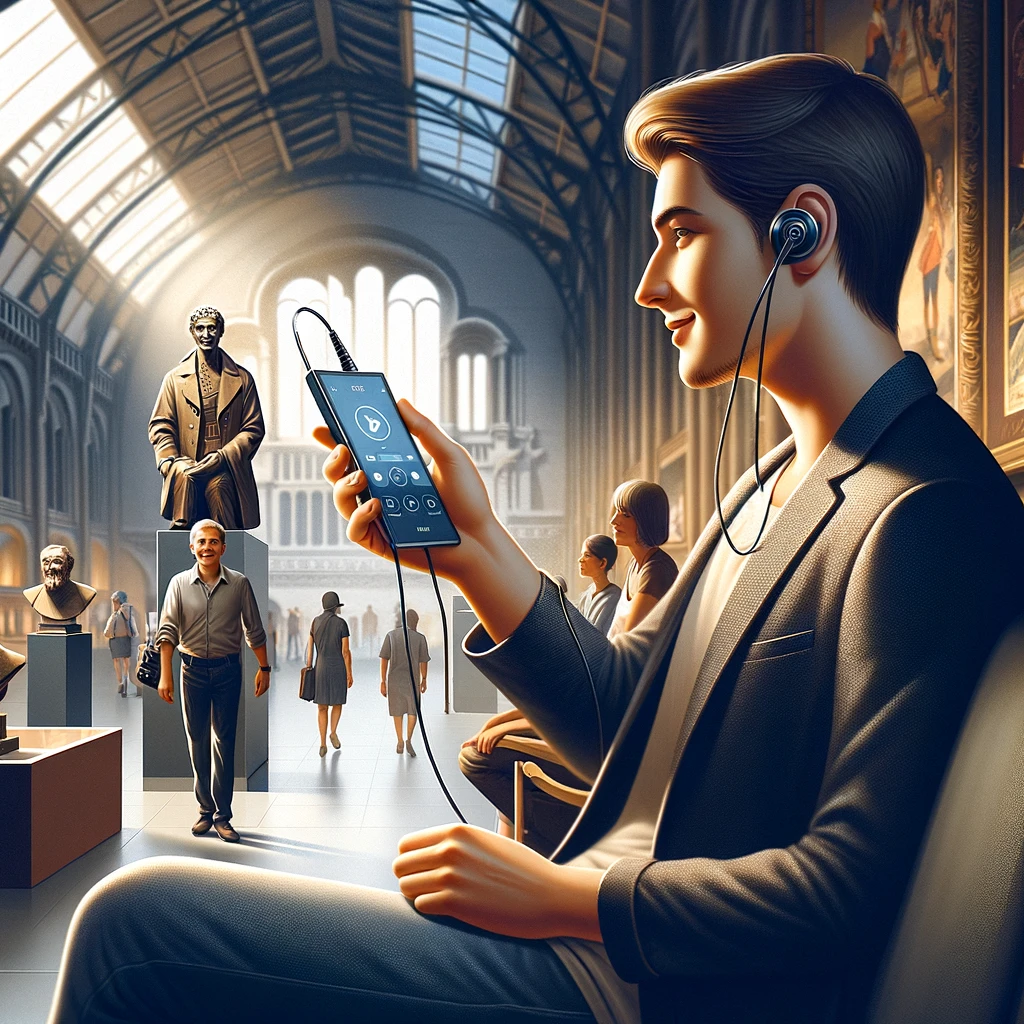
Accessibility in a cultural visit is not limited to entering a building or moving through spaces. It also concerns the way visitors receive information, understand the route and adapt the experience to their own needs. On a smartphone, these issues become very concrete: text size, contrast, reading pace, audio, language and the ability to return to content.
The audiences of a heritage site are rarely homogeneous. Some visitors read quickly, others prefer listening. Some come with family, others expect a deeper approach. International visitors need a suitable language, while others mainly want a clear route without overload. A good visit solution must accept this diversity rather than force everyone into the same pattern.
Display personalisation plays a discreet but important role. Being able to enlarge text, improve reading comfort or adjust settings makes content more welcoming. Audio, whether recorded or produced with high quality text to speech, also reduces reading effort and supports situations where the visitor cannot look at the screen continuously.
Guideius addresses every digital cultural mediation challenge
Create a multilingual smartphone audio guide that is easy to deploy, accessible and tailored to your museum, heritage site or destination.
Multilingual content is also part of accessibility. It is not only about translation; it is about helping each visitor grasp the meaning of a collection, a monument or a territory in a language familiar enough to create a relationship with the place.
Guideius integrates these dimensions into a simple visit experience: audio content, readable texts, translation, adapted tours, offline mode and centralised administration. For teams, the benefit is a single tool that can serve different visitor profiles without making reception more complex.
Accessible digital mediation does not replace human guidance, labels, printed materials or explanations on site. It adds freedom, which is essential if more visitors are to feel legitimate and autonomous in their discovery.
Would you like to apply these ideas to your site?
Guideius helps deploy multilingual audio tours with QR codes, GPS, offline mode, multimedia content and privacy-friendly analytics.
FAQ
How can a cultural visit become more accessible?
By combining readable texts, audio, multilingual content, clear routes and comfort settings adapted to different audiences.
Can a visit app help visitors who find reading difficult?
Yes, through audio, comfort settings and a more progressive content structure.
Is multilingual content part of accessibility?
Yes. Understanding content in a familiar language supports autonomy, confidence and connection with the place.
Does Guideius offer reading comfort settings?
Yes. Guideius includes display and reading personalisation options to make the experience more inclusive.