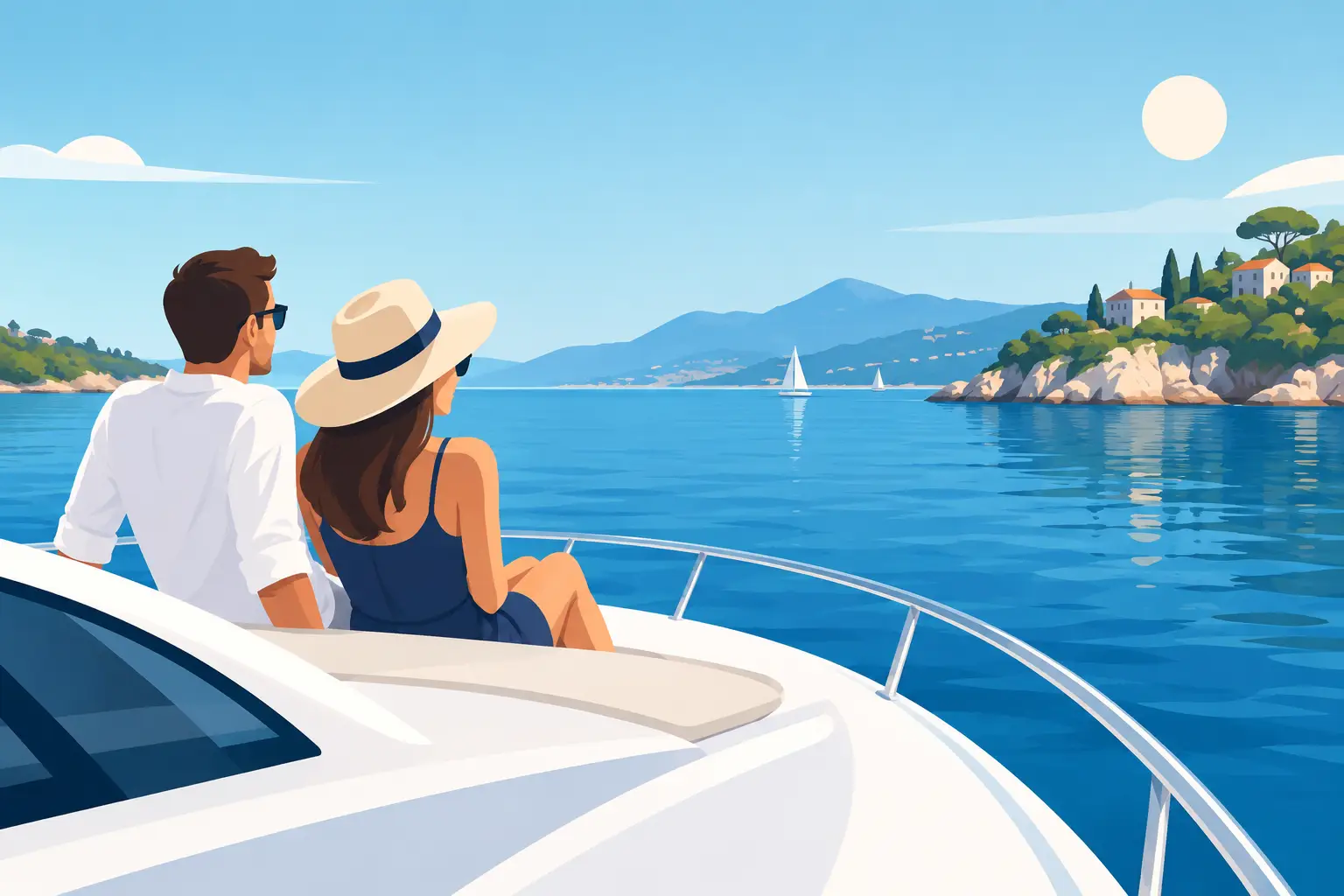
A boat trip is about more than travelling from one quay to another. On a river, canal or lake, or along the coast, visitors experience a landscape that changes as they move through it and can be difficult to understand without interpretation. There are many ways to enrich a boat trip: tell the story of an area, reveal heritage that cannot be seen from the shore, give visitors more independence or refresh a tourism offering without adding to the operational workload.
For tourist offices, local authorities, site managers and boat operators, the challenge is not simply to add commentary. It is to design an experience that suits the pace of the trip, mobile coverage, the needs of passengers and the resources available to staff.
Why interpretation on board changes the experience
Familiar landmarks look different from the water. A façade, bridge, lock or former industrial site takes on new meaning when seen from a boat. Yet continuous loudspeaker commentary has its limits: it can interrupt conversations, cannot easily accommodate different languages and offers little scope for personalisation.
A smartphone audio tour lets visitors choose their language, how much they listen to and how they engage with the trip. They can listen to a story, view archive material, take a quiz or simply enjoy the scenery. Staff no longer need to distribute, recharge and maintain a fleet of dedicated audio guide devices.
The right approach depends on the type of trip. A short urban crossing may only need a few carefully chosen pieces of content. A two-hour cruise can benefit from a more developed narrative, with commentary triggered by location.
Guideius addresses every digital cultural mediation challenge
Create a multilingual smartphone audio guide that is easy to deploy, accessible and tailored to your museum, heritage site or destination.
7 use cases for a boat trip
1. Interpret heritage visible from the water
The most obvious use is to help passengers understand the monuments, neighbourhoods and landscapes along the route. A distant castle, bridge piers, a citadel or the façades of a historic harbour can become stops in a story.
The aim is not to read out a fact sheet. Commentary can explain why a town grew beside the water, how its quays have changed or how flooding shaped its architecture. Historic photographs and maps included in the tour help put the landscape into context.
2. Tell the story of river, maritime and industrial heritage
Some important features of an area are difficult to appreciate on foot: former shipyards, locks, canals, embankments, silos, commercial ports and fishing grounds. A boat trip offers a natural vantage point from which to explain them.
This is useful for destinations that want to showcase technical heritage without reducing it to a list of dates. Former workers' accounts, archive recordings and explanations of local trades bring the story to life. Digital content need not replace a guide: it can complement live commentary with multilingual material or images that would otherwise be difficult to share.
3. Offer a multilingual tour without complicating boarding
Operators welcoming international visitors often have to balance the quality of the welcome against content production costs. Asking the crew to commentate in several languages is rarely practical, while printed materials quickly become outdated.
A QR code on the quay or on board gives passengers a simple way to access the tour. Each visitor selects a language and listens on their own phone with their own headphones. This reduces the tasks staff need to handle while better accommodating individual needs.
Editorial quality remains essential. Literal translation is not always enough: local references, humour and units of measurement may need adapting to the intended audience. Prioritising the languages passengers actually request, rather than an unnecessarily broad selection, helps keep the project useful and within budget.
4. Make the experience accessible to more visitors
A boat trip can give people who cannot manage a long or uneven urban walking route another way to discover heritage. The interpretation must also cater for different needs.
Transcripts, video subtitles, easy-to-read text, adjustable font sizes and adapted audio content help make the experience more inclusive. A simple interface is essential: noise, wind, glare and the boat's movement can all make a screen harder to use.
Accessibility extends beyond digital features. The trip duration, boarding arrangements, any steps and the space available on board should be clearly described. The tour should complement reliable practical information, not replace it.
5. Enrich a nature cruise and explain the landscape
On a lake, in a wetland, along an estuary or beside the coast, a boat trip offers a chance to discuss wildlife without turning the outing into a lecture. Content can introduce birds passengers may see, tidal cycles, plant species and habitat conservation.
The right balance is short, relevant content adapted to the season. A location-based alert can draw attention to a reed bed or nesting site. Passengers should not be overwhelmed with prompts: quiet moments and time to observe are an important part of nature interpretation.
6. Offer self-guided discovery on hire boats and shuttle services
Hire boats, river shuttles and small leisure craft rarely have a guide on board. They can still offer a structured way to discover local culture. Passengers can explore a mobile tour before departure, during the trip or at stopping points.
This approach works particularly well on regularly operated routes and tourism transport networks. It can connect points of interest and suggest places to explore ashore without imposing a fixed listening schedule. Offline access deserves particular attention, as mobile coverage can be patchy on the water, in valleys and along some riverbanks.
For operators, usage statistics provide practical feedback. They show which content people open, which languages they choose and where they stop following the tour. This helps improve the service using evidence rather than assumptions.
7. Support an event or cultural programme
A boat trip can become part of a cultural programme: heritage open days, summer activities, a temporary exhibition, a local commemoration or an evening tour. Digital content makes it possible to create a dedicated narrative without permanently changing the year-round experience.
For a twilight trip, content might explore local legends, harbour life after dark or the history of street lighting. A canal anniversary could bring together archive material, residents' accounts and extracts from documentary collections. This can make cultural resources available to audiences who would otherwise have little access to them.
Practical choices that make a difference
A good onboard tour starts with a survey of the actual route. GPS triggers need testing under real operating conditions, because the boat's speed, route variations and stopping times all affect when content starts. Allowing a margin can help ensure that commentary begins before the boat has passed the point of interest.
Audio length matters too. One- to two-minute segments are easier to fit into the trip than a ten-minute commentary. They can form a continuous narrative while allowing visitors to skip a segment or listen again.
Keeping the technology simple is also a matter of quality. A tour that runs on the visitor's phone, is easy to access by QR code and works offline reduces equipment requirements and the environmental footprint of dedicated devices. With a solution such as Guideius, teams can manage content, monitor usage and develop the tour without extensive technical expertise.
A successful boat trip leaves visitors with memories of the landscape and a deeper understanding of the area. When interpretation respects the pace of the journey and passengers' attention, it turns a trip into a lasting cultural experience.
Would you like to apply these ideas to your site?
Guideius helps deploy multilingual audio tours with QR codes, GPS, offline mode, multimedia content and privacy-friendly analytics.