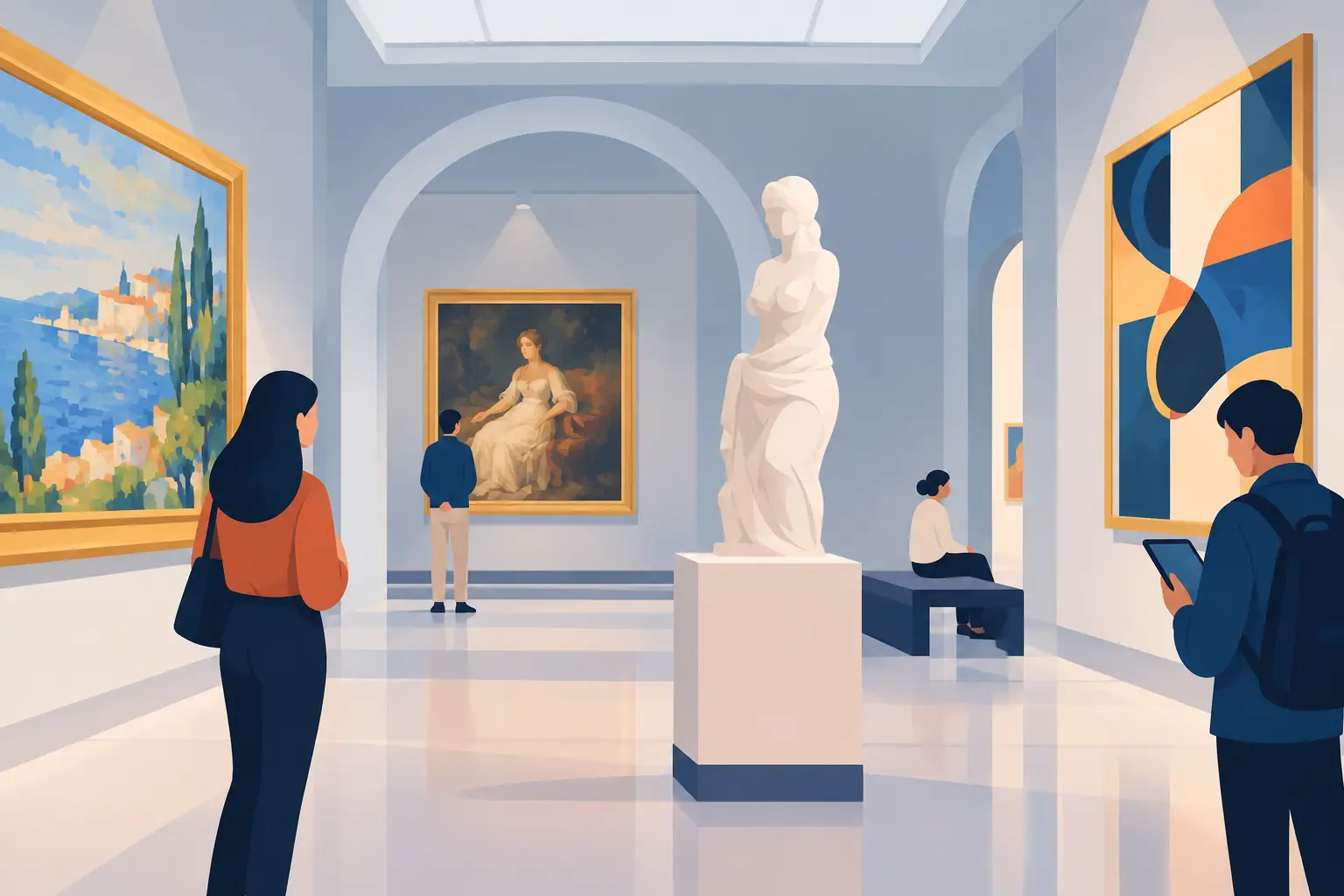
An artwork label can only tell part of the story. When looking at a history painting, portrait or sculpture, visitors often need some context to make sense of what they see, without being told how to interpret it. These six examples show how well-designed digital interpretation can help visitors explore the collection in greater depth, suit different audiences and make day-to-day work easier for museum staff.
The aim is to give visitors a discreet, accessible way to learn on their own smartphones, while allowing the museum to stay in control of the content. Fine art collections lend themselves to this approach: the same work can be explored through its history, aesthetics, techniques, social context or emotional impact.
1. Support self-guided visits and encourage closer looking
Many museum visitors explore independently. They move at their own pace, stop at different works and bring different levels of knowledge. A digital audio guide lets visitors choose their own commentary, accessed via QR codes beside the artworks or through a gallery map.
Audio leaves visitors free to look. Instead of listing every fact, it can draw attention to a detail, invite a comparison between two figures or ask what a gesture or a change in light might mean. A two-minute commentary built around one idea is often easier to remember than an information-heavy track.
This works well for permanent collections. Museums can feature a manageable selection of masterpieces alongside less familiar works that illuminate a period, an artistic school or the story of a donation. The tour adds a layer of interpretation without replacing the labels.
2. Bring different voices to the same collection
A painting can be explored through its technique, the circumstances in which it was made, the artist's life, how it entered the collection or the debates it prompts today. Digital tours can offer several routes through the same galleries without adding physical installations.
A thirty-minute introduction serves a different purpose from a tour about the representation of women, nineteenth-century landscapes or the materials used in sculpture. Visitors choose what interests them while the museum team keeps the overall interpretation consistent.
New routes give local visitors a reason to return without the museum having to redesign its galleries. They also help visitors make choices when the collection is extensive and time is short.
Give each tour a clear focus
Each tour should have a clear purpose: introduce an art movement, look differently at materials, explain an era or offer a selection for families. That purpose guides the choice of works, the length of each track and the tone.
If staff can update the tour without advanced technical skills, they can correct a detail, add a recently restored work or temporarily remove a stop without asking a supplier to make every change.
3. Bring temporary exhibitions to life
Temporary exhibitions often draw on extensive research. Gallery texts must stay concise, guided tours have limited capacity and not everyone can afford a catalogue. An audio or multimedia tour offers another way to explain curatorial choices.
It can show why two works are displayed together, include a curator's voice or use archival images to explain a stage of restoration. In a single-artist exhibition, it can place the works in the artist's career without turning gallery walls into a textbook.
A dense display may call for short, focused tracks. A more immersive exhibition can use soundscapes or personal accounts where they support the subject and make for a comfortable visit. The technology should not draw attention away from the artworks.
Staff can publish the tour for the opening, adjust it in response to feedback, then archive or reuse it. This can avoid printing short-lived materials or hiring dedicated devices for a brief exhibition.
Guideius addresses every digital cultural mediation challenge
Create a multilingual smartphone audio guide that is easy to deploy, accessible and tailored to your museum, heritage site or destination.
4. Design an inclusive visit from the start
Sign language content, transcripts, clear navigation, easy-to-read text and detailed descriptions help more visitors engage with the collection. Accessibility belongs in the design of the tour from the outset.
Audio description can help blind and partially sighted visitors understand a work's composition, forms, contrasts and relationships between figures. Precise and sensitive writing does more than list visual details. Clear language and context can also help people unfamiliar with museums.
Multilingual content supports international groups, tourists and residents who do not speak the museum's main language. A carefully adapted selection of essential tracks can be a useful starting point without translating the entire tour.
5. Support families and school groups
A family tour needs more than a simplified adult commentary. Audio questions, observation challenges and occasional quizzes can encourage children to imagine, compare and form their own views without turning the visit into a screen-based activity.
Leave time for quiet looking. Ask children to spot an animal, identify an expression or pick the most unusual detail. The task gives children and adults something to discuss in front of the work.
For schools, a tour designed for a particular year group can build on work done with the teacher. A self-guided route on accompanying adults' phones or shared devices can explore themes such as mythology, history, materials, power or social change.
6. Improve interpretation using visitor data
Usage statistics complement visitor observation and conversations with front-of-house staff. They can show which stops people listen to, where they leave the tour, which languages they select and whether they start at the entrance or in the galleries.
A seldom-played track might need clearer signage, a more helpful title or a shorter recording. Interest in a particular work might suggest a topic for a guided visit or publication. A high play count alone, however, says little about the quality of the experience.
Public and publicly funded organisations should collect only what they need, explain why they collect it and use it to improve the visit. A platform such as Guideius lets staff manage visitor statistics and content without running a complex infrastructure.
Design the tour before choosing the features
Start with the intended audience, the time available, the works to include and the message to convey. This helps avoid producing too much material or simply repeating gallery texts.
The venue also matters. Offline access helps in historic buildings and rooms with thick walls. GPS triggers may be useful across several sites. In a busy exhibition, QR codes let visitors get started without queuing at a desk.
A successful tour respects visitors' pace, supports museum staff and encourages closer attention to the works. Used thoughtfully, digital interpretation gives people more reasons to look, listen and return.
Would you like to apply these ideas to your site?
Guideius helps deploy multilingual audio tours with QR codes, GPS, offline mode, multimedia content and privacy-friendly analytics.