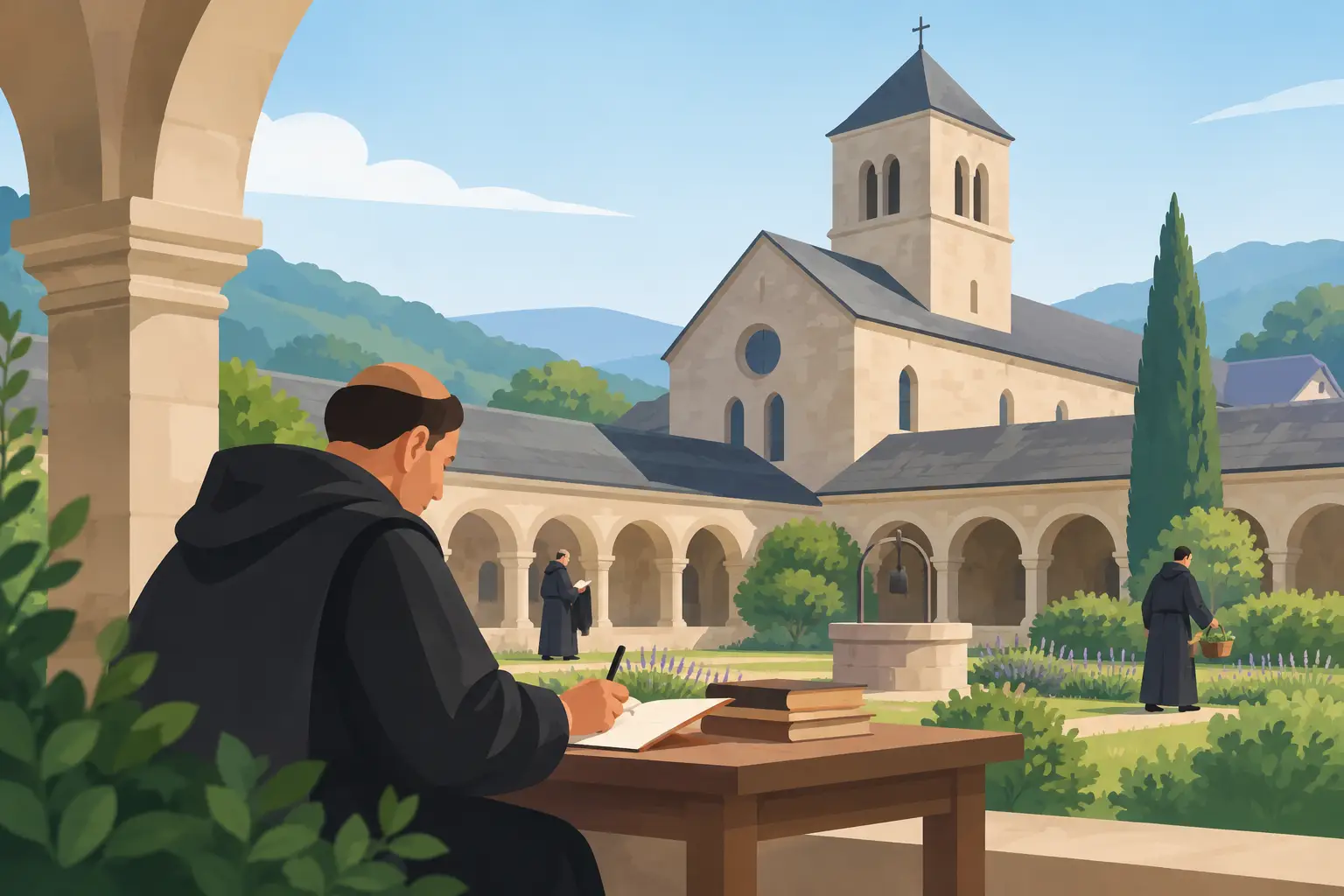
Visiting a monastery is not the same as visiting a museum. Silence, religious practice, fragile spaces and the possible presence of a resident community call for sensitive interpretation. Practical uses for audio guides in monasteries and abbeys show how much a digital tour can add, provided it respects the rhythm of the place rather than overwhelming it.
For the teams managing these sites, the aim is more than sharing information. It is to help visitors understand a complex group of buildings, explore a history often spanning a thousand years, welcome international audiences and preserve an atmosphere of contemplation. A smartphone tour opened through QR codes or GPS offers a useful balance between visitor independence, limited equipment and thoughtful interpretation.
Make the site’s history understandable without oversimplifying it
An abbey often contains layers of history: its religious foundation, periods of prosperity, wars, agricultural changes, closure or new uses during the French Revolution, heritage restoration and cultural life today. Labels alone soon struggle to explain this complexity.
An audio guide can tell the story in short sections at the relevant locations. In the cloister, visitors can discover how the monks organised their day. Outside the abbey church, they can learn to recognise Romanesque or Gothic architecture. In the refectory, they hear about eating in silence; in the scriptorium or a manuscript gallery, they appreciate the work of copying texts and preserving knowledge.
Avoid encyclopaedic commentary. Precise storytelling supported by archival material, personal accounts or subtle ambient sound creates a closer connection with the site. Different levels of detail can help: a thirty-minute highlights tour for visitors passing through, with additional content for those who want to explore further or for school groups.
Practical uses in a monastery or abbey
Help visitors navigate a complex site
Abbeys rarely follow a linear museum layout. The entrance may be some distance from the church, certain spaces open only at particular times, and gardens extend the visit beyond the buildings. A digital tour brings structure without forcing everyone along a rigid route.
QR-coded listening points can guide visitors where GPS is less reliable, particularly inside thick-walled or vaulted rooms. Outdoors, location-based activation can connect a tithe barn, an old fishpond, a mill or remains some distance from the abbey’s centre.
This flexibility helps when access changes with the seasons, religious services, building work or weather. Staff can adjust the route through a management interface, without reprinting all the signage or reconfiguring a fleet of audio guide devices.
Preserve silence and places of worship
At a site still inhabited or used for worship, an audio guide must not disturb others. Visitors’ own smartphones, used with headphones, limit sound in shared spaces. Simple guidance at the entrance can explain expected behaviour, service times and areas reserved for the community.
The tour can also leave space for silence. In a nave, before a stained-glass window or in a monastic garden, quiet is part of the heritage experience. Good interpretation draws attention to what is worth noticing, then gives visitors time to look and listen to the place itself.
This distinguishes an audio guide from a continuously narrated guided visit. The formats complement each other: a guide offers conversation and adapts to the group, while a digital tour serves individual visitors, late arrivals and times when staff are less available.
Welcome international visitors without multiplying printed materials
Monastic sites often attract international visitors, especially along major cultural routes, pilgrimage trails and rural destinations busy in summer. Producing printed information in several languages adds costs, updating work and the risk of content becoming scattered across different versions.
A multilingual audio guide can offer a consistent experience. Content may need cultural adaptation as well as translation: historical and religious references familiar to local people may require more explanation for international visitors. Editorial quality is essential. Literal translation is not enough to explain a monastic rule, liturgical roles or the history of a religious order.
Offline access is valuable in historic buildings and rural sites with patchy mobile coverage. Visitors download the tour before or at the start of their visit, then keep access without relying on a connection on site.
Guideius addresses every digital cultural mediation challenge
Create a multilingual smartphone audio guide that is easy to deploy, accessible and tailored to your museum, heritage site or destination.
Make interpretation accessible to different audiences
Accessibility is not a separate piece of content added at the margins. It can shape an abbey tour from the outset. Transcripts alongside audio help deaf and hard-of-hearing visitors. Detailed descriptions help partially sighted people understand a column capital, a carved doorway or the arrangement of a space.
Language also needs care. Religious history and monastic architecture use specialist terms: transept, chapter house, lay brothers, apse and cellar. These terms belong in the story if explained when encountered. Digital tools can also offer a family trail with observation questions or short quizzes, without reducing the depth of the adult tour.
For school groups, the tour can build on classroom work. Themes such as food, water management, manuscript illumination and daily life connect heritage with history, art and science curricula. Encourage investigation and observation rather than passive recall of dates.
Bring gardens, landscapes and outbuildings into the visit
An abbey is more than its church. Gardens, orchards, waterways, barns, former workshops and approach roads reveal how communities supported themselves, the skills they developed and their relationship with the landscape.
An outdoor tour can explore medicinal plants, water use, cultivation and changes to agricultural buildings. It can also spread visitor flows by drawing attention to quieter areas. Where soil conservation or neighbours’ peace requires it, plan the route carefully: offering guidance is not an invitation to walk everywhere.
Location-based content is useful because it opens the story where the landscape makes sense of it. It can also support independent visits outside the main season, when outdoor spaces remain open but visitor reception is limited.
Use evidence to help staff improve the tour
Usage data help teams make practical decisions. Which stops receive the most listens? Where do visitors leave the trail? Which languages are most requested? These indicators cannot replace conversations with visitors, but can guide improvements.
Frequent use of a cloister stop may suggest a need for seating or clearer signage. A rarely opened stop may point to poor visibility, overlong content or confusing access. Smaller organisations can use such findings to improve gradually rather than undertake a major project each time.
Choose a tool proportionate to the resources available. Guideius, for example, supports audio tours without buying or maintaining dedicated devices, while staff retain control of content and updates. But technology only helps when it serves a clearly defined interpretation plan: intended audiences, tone, accessible areas, conservation needs and the team’s actual capacity.
In a monastery or abbey, the best digital tour is not one that speaks at every step. It offers understanding, respects silence and lets each visitor find their own connection with the place.
Would you like to apply these ideas to your site?
Guideius helps deploy multilingual audio tours with QR codes, GPS, offline mode, multimedia content and privacy-friendly analytics.